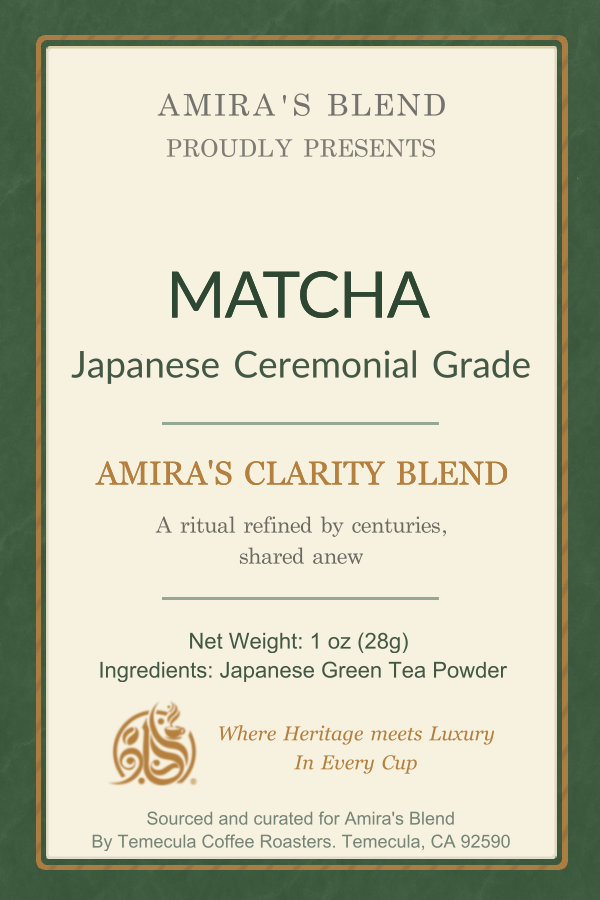
🌿 Amira’s Matcha: Clarity Blend — The Ceremony of Stillness
The fires had cooled. The scent of roasted beans still clung to her satchel, a memory of the lands that once worshiped heat as devotion.
For years Amira had served where flame was sacred — where smoke rose like prayer and perfection was judged by sound and scent. She had tended those fires with the same care others gave to altars. Coffee was ceremony, and she its keeper.
Yet in the eastern valleys of Kakegawa, she found another ritual — one that spoke not through fire, but through silence. The air there was soft, the hills veiled in mist. In a small wooden temple, she knelt before those who practiced the Way of Tea.
They too served a sacred drink, but their reverence moved differently. There was no crackle of roasting, no hiss of boiling metal — only the quiet rhythm of cloth against wood, the breath of water as it met the bowl.
Each gesture was measured, not for display but for meaning. The host bowed to the leaf, to the water, to the guest. He washed each utensil not to cleanse it, but to prepare it to remember.
Amira watched, at first puzzled, then still.
She knew devotion; she had lived it in flame. But here was devotion unbound by fire — a purity born of patience. The leaves were grown in shadow so their color might deepen; the flavor revealed itself only to those who lingered. It was discipline turned to grace.
When at last the bowl was placed before her, turned so its most beautiful face met her eyes, she hesitated. Then she bowed, and drank. The taste was quiet — not bold, not sweet, but alive in its calm. It did not rush to speak; it waited to be heard.
In that stillness, she felt the weight of all rituals: how every culture seeks to honor the moment between motion — the breath before creation.
She called it Clarity Blend, a ceremonial-grade matcha crafted in homage to that silence.
A cup not born of flame, but of intention. A ritual for those who know that even in still water, there is depth — and even in quiet, the journey continues.
The fires had cooled. The scent of roasted beans still clung to her satchel, a memory of the lands that once worshiped heat as devotion.
For years Amira had served where flame was sacred — where smoke rose like prayer and perfection was judged by sound and scent. She had tended those fires with the same care others gave to altars. Coffee was ceremony, and she its keeper.
Yet in the eastern valleys of Kakegawa, she found another ritual — one that spoke not through fire, but through silence. The air there was soft, the hills veiled in mist. In a small wooden temple, she knelt before those who practiced the Way of Tea.
They too served a sacred drink, but their reverence moved differently. There was no crackle of roasting, no hiss of boiling metal — only the quiet rhythm of cloth against wood, the breath of water as it met the bowl.
Each gesture was measured, not for display but for meaning. The host bowed to the leaf, to the water, to the guest. He washed each utensil not to cleanse it, but to prepare it to remember.
Amira watched, at first puzzled, then still.
She knew devotion; she had lived it in flame. But here was devotion unbound by fire — a purity born of patience. The leaves were grown in shadow so their color might deepen; the flavor revealed itself only to those who lingered. It was discipline turned to grace.
When at last the bowl was placed before her, turned so its most beautiful face met her eyes, she hesitated. Then she bowed, and drank. The taste was quiet — not bold, not sweet, but alive in its calm. It did not rush to speak; it waited to be heard.
In that stillness, she felt the weight of all rituals: how every culture seeks to honor the moment between motion — the breath before creation.
She called it Clarity Blend, a ceremonial-grade matcha crafted in homage to that silence.
A cup not born of flame, but of intention. A ritual for those who know that even in still water, there is depth — and even in quiet, the journey continues.